| Sign In | Join Free | My benadorassociates.com |
|
| Sign In | Join Free | My benadorassociates.com |
|
| Categories | Stainless Steel Plate |
|---|---|
| Brand Name: | TISCO BAOSTEEL |
| Model Number: | 17-7PH |
| Certification: | ISO |
| Place of Origin: | China |
| MOQ: | 500 kgs |
| Price: | 2100-5300 USD/Ton |
| Payment Terms: | T/T, Western Union |
| Supply Ability: | 20Ton per week |
| Delivery Time: | 5 - 12 days based on the quantity |
| Packaging Details: | standard packing for export |
| Products: | Stainless Steel Plate |
| Grade: | 17-7PH |
| Thickness: | 3.0-40.0mm |
| Width: | 1500mm 1219mm 1000mm |
| Surface: | NO.1 2B |
| Brand: | TISCO |
| Standard: | ASTM A240/240M |
| Loading Port: | Shanghai Port |
| Company Info. |
| JIANGSU MITTEL STEEL INDUSTRIAL LIMITED |
| Verified Supplier |
| View Contact Details |
| Product List |
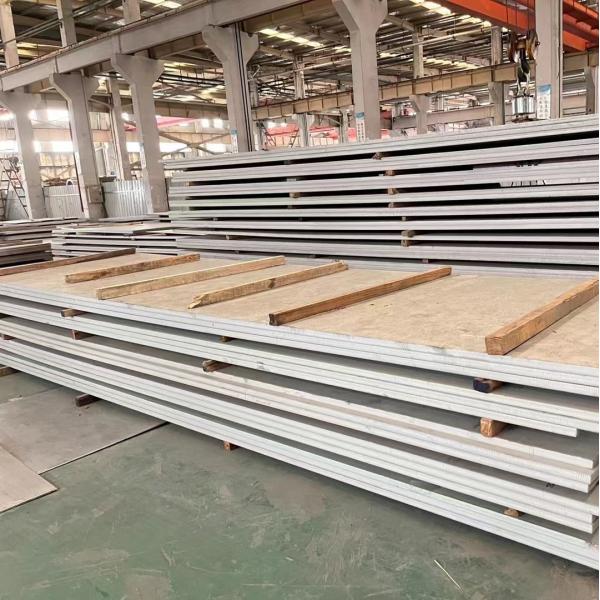
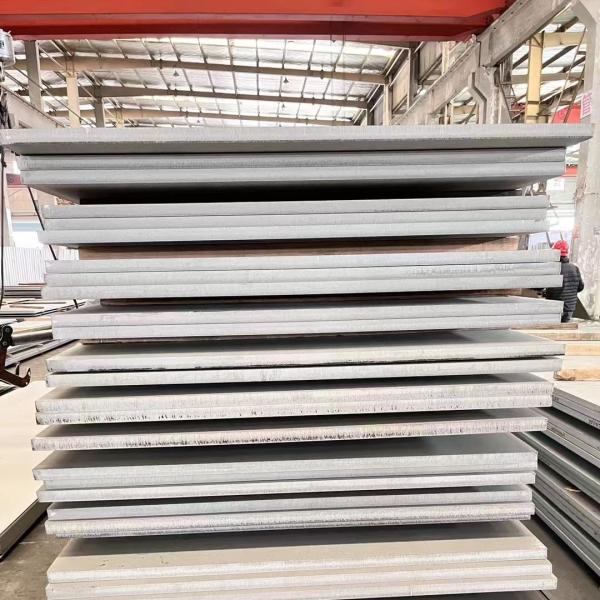
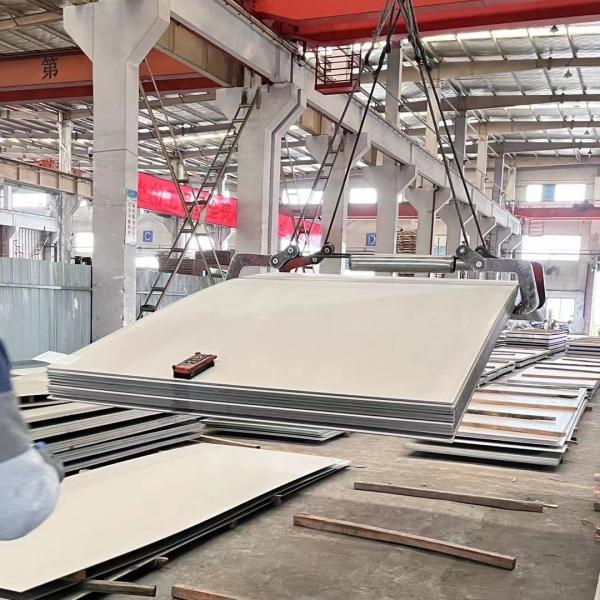
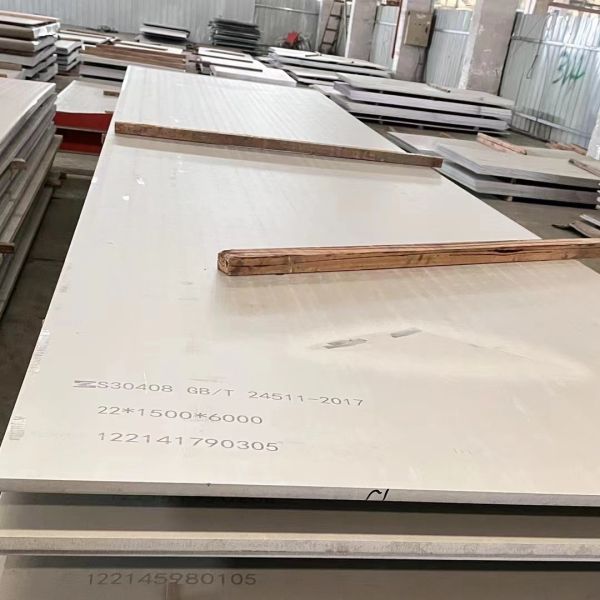
EN 1.4404 / AISI316L Stainless Steel Plate from POSCO BAOSTEEL TISCO Hot Rolled 3.0 - 60.0mm
| Products | 1.4404 / 316L Stainless Steel Plate |
| Standard | ASTM JIS GB EN DIN |
| Thickness | 3.0 - 60.0mm |
| Width | 1000mm 1219mm 1500mm 2000mm or custom as request |
| Length | 2000 - 6000mm or as request |
| Surface | NO.1 |
| Service | Cutting, Bending. Surface Finishing |
| MOQ | 1 Ton |
| Loading Port | Shanghai Port, Ningbo Port |
| Packing | wooden pallets and waterproof paper |
| Other Grade | 201 202 301 304 304L 304H 309S 310S 316L 316Ti 317L 347 321 2205 2507 904L 409L 410 420 430 431 436 439 441 444 440A/B/C.etc |
| Brand | TISCO BAOSTEEL JISCO LISCO |
Alloys often are added to steel to increase desired properties. Marine-grade stainless steel, called type 316, is resistant to certain types of corrosive environments.
There is a variety of different types of 316 stainless steel. Some common types are the L, F, N, and H variants. Each is slightly different, and each is used for different purposes. The "L" designation means 316L steel has less carbon than 316.
While similar to Type 304, which is common in the food industry, both type 316 and 316L exhibit better corrosion resistance and are stronger at elevated temperatures. They also are both non-hardenable by heat treatment and can be readily formed and drawn (pulled or pushed through a die or smaller hole).
Annealing (a treatment to reduce hardness and increase ductility, or the ability to accept plastic deformation) 316 and 316L stainless steels require heat treatment of between 1,900 and 2,100 degrees Fahrenheit (1,038 to 1,149 degrees Celsius) before rapidly quenching.
316 stainless steel has more carbon in it than 316L. This is easy to remember, as the L stands for "low." But even though it has less carbon, 316L is very similar to 316 in almost every way. Cost is very similar, and both are durable, corrosion-resistant, and a good choice for high-stress situations.
316L, however, is a better choice for a project that requires a lot of welding because 316 is more susceptible to weld decay than 316L (corrosion within the weld). However, 316 can be annealed to resist weld decay. 316L also is a great stainless steel for high-temperature, high-corrosion uses, which is why it's so popular for use in construction and marine projects.
Neither 316 nor 316L is the cheapest option. 304 and 304L are similar but lower-priced. And neither are as durable as 317 and 317L, which have higher molybdenum content and are better for overall corrosion resistance.
Type 316 steel is an austenitic chromium-nickel stainless steel that contains between two and 3% molybdenum. The molybdenum content increases corrosion resistance, improves resistance to pitting in chloride ion solutions, and increases strength at high temperatures.
Type 316 grade stainless steel is particularly effective in acidic environments. This grade of steel is effective in protecting against corrosion caused by sulfuric, hydrochloric, acetic, formic, and tartaric acids, as well as acid sulfates and alkaline chlorides.
Common uses for type 316 stainless steel include in the construction of exhaust manifolds, furnace parts, heat exchangers, jet engine parts, pharmaceutical and photographic equipment, valve and pump parts, chemical processing equipment, tanks, and evaporators. It also is used in pulp, paper, and textile processing equipment and for any parts exposed to marine environments.
The lower carbon content in 316L minimizes deleterious carbide precipitation (carbon is drawn out of the metal and reacts with chromium due to heat, weakening the corrosion resistance) as a result of welding. Consequently, 316L is used when welding is required to ensure maximum corrosion resistance.
Physical Properties of type 316 and 316L steels:
Here is a breakdown of the percentages of various elements used to create type 316 and 316L steels:
| Element | Type 316 (%) | Type 316L (%) |
| Carbon | 0.08 max. | 0.03 max. |
| Manganese | 2.00 max. | 2.00 max. |
| Phosphorus | 0.045 max. | 0.045 max. |
| Sulfur | 0.03 max. | 0.03 max. |
| Silicon | 0.75 max. | 0.75 max. |
| Chromium | 16.00-18.00 | 16.00-18.00 |
| Nickel | 10.00-14.00 | 10.00-14.00 |
| Molybdenum | 2.00-3.00 | 2.00-3.00 |
| Nitrogen | 0.10 max. | 0.10 max. |
| Iron | Balance | Balanc |

|
 201 304 316L Anti Slip Checkered Stainless Steel Sheet
UNS S32205 Stainless Steel Duplex Plate 2205 Thickness 0.4-16.0mm TISCO POSCO
316L 1.4404 Stainless Steel Plate 3.0-16.0mm Width 1500mm TISCO POSCO
EN 10204-3.1 316L Stainless Plate 1.4404 Hot Rolled 3.0-16.0mm
ISO9001 316L Stainless Steel Plate 3.0-100mm 1500mm 1219mm 1000mm
EN 1.4404 0.4-60.0mm Stainless Steel Hot Rolled Plate NO.1 2B
UNS S31603 Stainless Steel Plate 316L 1.4404 SUS316L 1500mm 1800mm 2000mm
Heat Resistant Polished SS Sheet 310S 0.8-16.0mm 2B NO.1 Surface Grade EN 1.4845
310S Hot Rolled Stainless Steel Plate 1.4845 S31008 0.6-16.0mm
ASME UNS S31008 16.0mm-3mm Thick Stainless Steel Sheet
201 304 316L Anti Slip Checkered Stainless Steel Sheet
UNS S32205 Stainless Steel Duplex Plate 2205 Thickness 0.4-16.0mm TISCO POSCO
316L 1.4404 Stainless Steel Plate 3.0-16.0mm Width 1500mm TISCO POSCO
EN 10204-3.1 316L Stainless Plate 1.4404 Hot Rolled 3.0-16.0mm
ISO9001 316L Stainless Steel Plate 3.0-100mm 1500mm 1219mm 1000mm
EN 1.4404 0.4-60.0mm Stainless Steel Hot Rolled Plate NO.1 2B
UNS S31603 Stainless Steel Plate 316L 1.4404 SUS316L 1500mm 1800mm 2000mm
Heat Resistant Polished SS Sheet 310S 0.8-16.0mm 2B NO.1 Surface Grade EN 1.4845
310S Hot Rolled Stainless Steel Plate 1.4845 S31008 0.6-16.0mm
ASME UNS S31008 16.0mm-3mm Thick Stainless Steel Sheet

