| Sign In | Join Free | My benadorassociates.com |
|
| Sign In | Join Free | My benadorassociates.com |
|
| Categories | Laparoscopic Surgical Instruments |
|---|---|
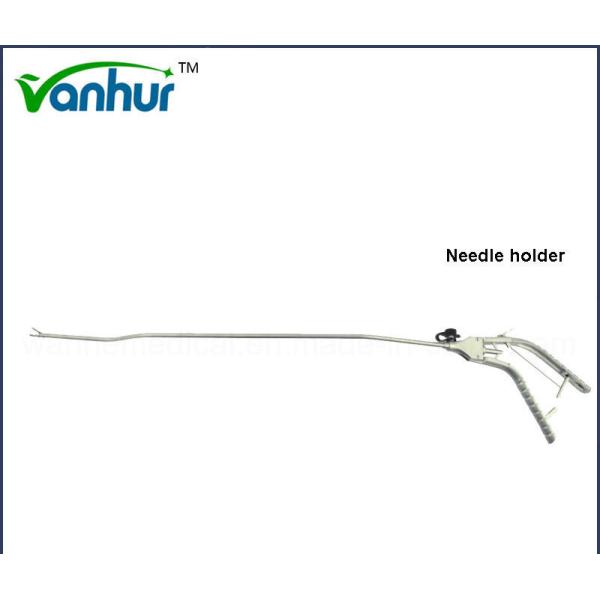
| Model NO.: | HF2008.1W |
| OEM: | Acceptable |
| ODM: | Acceptable |
| Dimension: | Φ5×410mm |
| Transport Package: | Standard Export Packing |
| Specification: | Steel |
| Trademark: | Vanhur |
| Origin: | Tonglu, Zhejiang, China |
| HS Code: | 9018909919 |
| Supply Ability: | 500 PCS/Month |
| Type: | Trocar |
| Application: | Abdominal |
| Material: | Plastic |
| Feature: | Reusable |
| Certification: | CE, FDA, ISO13485 |
| Group: | Adult |
| Customization: | Available | Customized Request |
| Company Info. |
| Tonglu Wanhe Medical Instrument Co., Ltd. |
| Verified Supplier |
| View Contact Details |
| Product List |
| Package detail: | Poly bag and special shockproof paper box. |
| Delivery detail: | By air |

FAQ
The following aspects need to be considered when choosing minimally
invasive surgical instruments for a specific type of surgery:
Surgery type and requirements: Different types of surgery have different requirements for
instruments. For example, living liver transplantation requires
delicate operations and less bleeding, so high-precision cutting
and anastomosis instruments are required.
Technical parameters and process level of the instrument: When selecting an instrument, you should consider whether its
technical parameters and process level meet the surgical
requirements.
Passivity and disposable use of the instrument: Passive surgical instruments can reduce human interference during
surgery and improve surgical safety. For example, disposable
minimally invasive laparoscopic cutting and anastomosis instruments
and their components can provide precise cutting and anastomosis
functions while reducing the risk of infection.
Design and optimization of instruments: The design and optimization of handheld multi-degree-of-freedom
minimally invasive surgical instruments can improve the flexibility
and precision of surgical operations, thereby adapting to the needs
of complex surgeries.
Clinical guidelines and technical guidelines: Referencing the latest clinical guidelines and technical
guidelines can help choose the most suitable instrument.
Choosing minimally invasive surgical instruments for a specific
type of surgery requires comprehensive consideration of the type of
surgery, the technical parameters of the instrument, passivity and
disposable use, design and optimization, and the latest clinical
guidelines and technical guidelines. Through comprehensive
evaluation of these aspects, it is possible to ensure that the most
suitable instrument is selected to improve the success rate of the
operation and minimize complications.
In living liver transplantation, the technical parameters and
process levels of minimally invasive instruments are crucial. Here
are a few key points:
Laparoscopic technology: Laparoscopic minimally invasive technology has been routinely
performed in thoracic and abdominal surgical operations. With its
significant advantages such as minimally invasive and magnified
visual field effects, it has replaced open surgery and become the
preferred technology for most surgical operations. For example, the
Third Affiliated Hospital of Sun Yat-sen University successfully
implemented a fully laparoscopic live donor liver extraction and
pediatric liver transplantation, marking the entry of liver
transplantation in South China into the "minimally invasive" era.
Mechanical perfusion technology: Although mechanical perfusion technology has brought new hope to
the preservation of donor livers, its main technical parameter
settings have not yet been unified, and it is still in the clinical
trial stage. Widespread application still requires large sample
size and multi-center research support. In addition, the ischemic
liver transplantation (IFLT) technology further improves the
success rate and safety of the operation by monitoring liver
perfusion parameters and blood gas biochemical indicators,
recording the early recovery of liver function and complications
after surgery.
The most popular passive and disposable minimally invasive
laparoscopic cutting stapler is a product that uses bladeless blunt
separation technology.
How does the design and optimization of handheld
multi-degree-of-freedom minimally invasive surgical instruments
improve the flexibility and precision of surgical operations?
The design and optimization of handheld multi-degree-of-freedom
minimally invasive surgical instruments can improve the flexibility
and precision of surgical operations in many ways.
Increasing the freedom of tools can significantly improve the
flexibility of surgery. For example, the world's first
single-handed stapler and the 60° ultra-large angle laparoscopic
stapler both demonstrate the advantages of increasing the degree of
freedom to improve operational flexibility. In addition, studies
using inertial and magnetic navigation integrated systems for
posture tracking have also shown that the position and direction of
the instrument can be effectively tracked through precise
navigation technology, thereby improving the flexibility of
surgery.
The use of robotics and motion capture systems can further improve
the accuracy of surgery. Robots have the advantages of stable
operation and accurate positioning, while motion capture devices
can complete surgery under three-dimensional image display,
allowing doctors to control surgical instruments more accurately.
In addition, the continuous development of minimally invasive
surgical techniques and instruments in the fields of energy
platforms and imaging equipment is also constantly promoting
laparoscopic surgery to be more precise and safer. Through these
technological innovations, doctors can complete surgical operations
without surgery, reducing surgical trauma and patient pain.
The "Guidelines for Minimally Invasive Surgery of Living Donor
Liver Transplantation in China" provides the following specific
instrument selection recommendations:
Robotic surgical system: The guidelines emphasize the importance of robotic surgical
systems in minimally invasive surgery, pointing out that they can
greatly improve the accuracy and safety of surgery.
Laparoscopic-assisted living donor liver resection: The guidelines mention the use of laparoscopy to assist in living
donor liver resection, which has the advantages of less trauma,
less bleeding, and faster postoperative recovery.
Total laparoscopic living donor liver harvesting: In addition, the guidelines also recommend total laparoscopic
living donor liver harvesting, which is a more advanced minimally
invasive surgical method that further reduces surgical trauma and
recovery time.
When selecting minimally invasive surgical instruments, the
evaluation of their effect on reducing complications can be carried
out from the following aspects:
Safety evaluation: There should be corresponding safety evaluation methods in the
design, manufacture and use of minimally invasive surgical
instruments. For example, the key issues of work performance
evaluation need to be considered in the design of laparoscopic
surgical robot systems to ensure their safety and effectiveness in
actual operations.
Clinical trials and real-world studies: Evaluate the safety, clinical performance and/or effectiveness of
medical devices through systematic trials or studies. For example,
each case serves as its own control in different time periods
before and after the event, and the relationship between the use of
the device and the event is evaluated by comparing the situation of
the case before and after the event.
Technical advantages: Minimally invasive surgical instruments generally have the
advantages of less trauma, high safety and low complications.
Technological innovation and application: Continuously promoting
the innovation and application of minimally invasive treatment
technology can significantly reduce the trauma and complication
rate of open surgery. For example, minimally invasive precision
surgery has shown significant advantages in fracture treatment.
Comprehensive evaluation: Combine clinical needs and technical characteristics to
comprehensively evaluate the effects of minimally invasive surgical
instruments. For example, the evaluation method of surgical robot
mechanism and surgical skills based on safety can help doctors
better select and use minimally invasive surgical instruments.
For more photos and details please contact me:
Company Name: Tonglu Wanhe Medical Instruments Co., Ltd.
Sales: Aiden
|
 Class II Medical Disposable Ligating Hemolok Clip Clips Laparoscopic Vascular Clamp Hemoclip Applier
Reusable Laparoscopic Needle Holder Wanhe Gun Type for Surgical Operation Requirements
Manual Power Source Wanhe 5mm Laparoscopic Surgical Debakey Grasping Forceps Durable
HF2001.9 Surgical Instruments Hem-O-Lok Liga Clip Applicator With CE Certification
Type 2 Medical Device Regulatory Vanhur Medical Polymer Ligating Clips HF8081.8
Reusable Clip Applier for Open Surgery Hem-O-Lok Style FDA Certified Steel Design
HF2001.11 ODM Acceptable Medical Hem-O-Lok Clip Remover for Clip Removal of All Sizes
5mm Laparoscopic Instruments Gastric Grasping Forceps/Single Action/Atraumatic and OEM
10mm Laparoscopic Instruments Atraumatic Grasping Forceps for Adult CE Certification
Surgical Laparoscopic Instruments Biopsy Punch Forceps with FDA Certification HF7010
Class II Medical Disposable Ligating Hemolok Clip Clips Laparoscopic Vascular Clamp Hemoclip Applier
Reusable Laparoscopic Needle Holder Wanhe Gun Type for Surgical Operation Requirements
Manual Power Source Wanhe 5mm Laparoscopic Surgical Debakey Grasping Forceps Durable
HF2001.9 Surgical Instruments Hem-O-Lok Liga Clip Applicator With CE Certification
Type 2 Medical Device Regulatory Vanhur Medical Polymer Ligating Clips HF8081.8
Reusable Clip Applier for Open Surgery Hem-O-Lok Style FDA Certified Steel Design
HF2001.11 ODM Acceptable Medical Hem-O-Lok Clip Remover for Clip Removal of All Sizes
5mm Laparoscopic Instruments Gastric Grasping Forceps/Single Action/Atraumatic and OEM
10mm Laparoscopic Instruments Atraumatic Grasping Forceps for Adult CE Certification
Surgical Laparoscopic Instruments Biopsy Punch Forceps with FDA Certification HF7010

