| Sign In | Join Free | My benadorassociates.com |
|
| Sign In | Join Free | My benadorassociates.com |
|
| Categories | Wear Resistant Ceramic Pipe |
|---|---|
| Place of Origin: | Changsha, Hunan, China |
| Brand Name: | Ibeno |
| Certification: | ISO9001-2015 |
| MOQ: | Negotiable |
| Price: | Negotiable |
| Model Number: | Wear Resistant Ceramic Pipe |
| Packaging Details: | Packed in wooden cases or iron racks |
| Delivery Time: | 25-45 workdas |
| Payment Terms: | T/T |
| Supply Ability: | 100,000 ㎡/ year |
| Thickness: | Customized |
| Rockwell A hardness: | ≥85HRA |
| Inner Diameter: | 50-500mm |
| Abrasion Resistance: | Superior |
| Cost: | Reasonable |
| Resistance: | Wear Resistant |
| Hardness: | 9 Mohs |
| Weight: | Light |
| Density: | 3.75 g/cm3 |
| Color: | White |
| Application: | Transportation of abrasive materials |
| Smooth Inner Surface: | Reduces friction and wear |
| Wear Resistance: | Excellent |
| Lifespan: | Long |
| Company Info. |
| Hunan Yibeinuo New Material Co., Ltd. |
| Verified Supplier |
| View Contact Details |
| Product List |
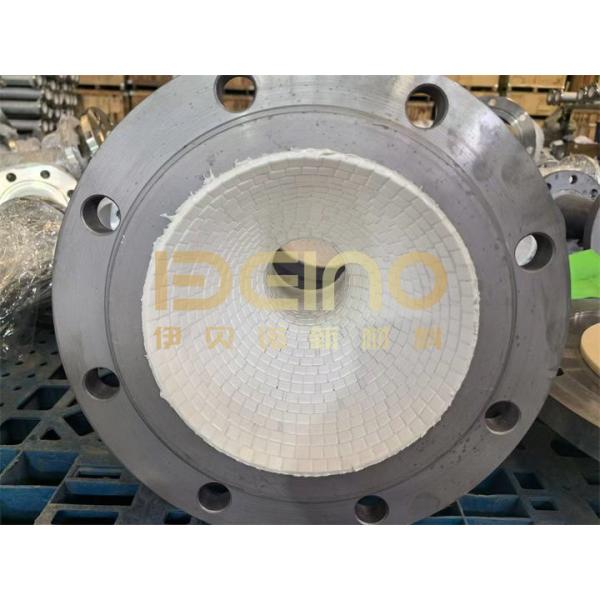
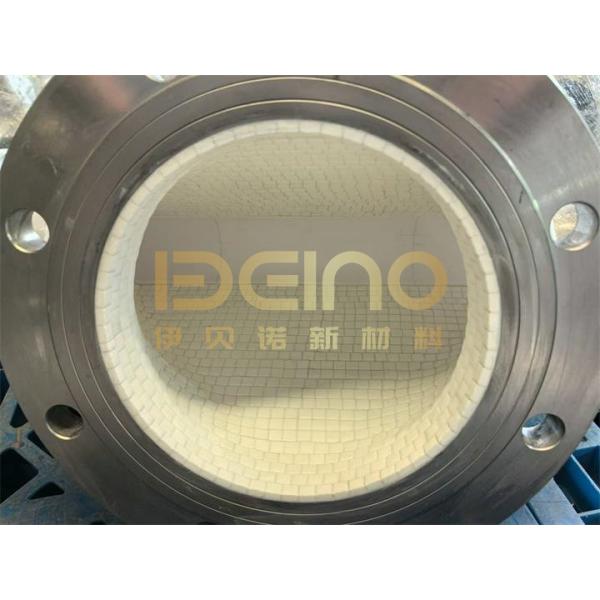
Wear-resistant ceramic lined steel pipes are composed of steel pipes and ceramic sheets, which combine the
strength of ceramics and steel into an efficient pipeline solution.
This innovative pipeline design can withstand extreme wear and is
an ideal choice for a wide range of industrial applications.
The core of wear-resistant ceramic lined steel pipes is a ceramic lining with exceptional hardness and wear resistance. The ceramic layer is usually composed of aluminum oxide (Al2O3), which has a hardness even higher than that of hardened steel, providing excellent wear resistance and durability. This means that the
pipeline can withstand a constant abrasive flow with minimal wear.
The ceramic lining is a steel shell that can further increase strength and stiffness. The steel casing protects fragile ceramics from physical impact and facilitates installation and integration into existing pipeline systems. The combination of ceramic lining and steel shell creates a pipeline that is both tough and elastic, meeting even the most challenging industrial environments.
Technical Parameters
| Items | Specifications |
Content of alumina | ≥95% |
Density | ≥3.8 g/cm3 |
Rockwell A hardness | ≥85HRA |
Impact strength | ≥1500 MPA |
Fracture toughness | ≥4.0MPa·m1/2 |
Bending Strength | ≥330MPa |
Thermal conductivity | 20W/m.K |
Thermal expansion coefficient | 7.2×10⁻⁶m/m.K |
Volume wear | ≤0.02cm3 |
Production process
The production process of wear-resistant ceramic lined steel pipe is a complex and delicate process that requires multiple processes
and strict quality control.
First of all, the selection of high-quality raw materials is the basis for producing high-quality ceramic pipes. The company will select suitable ceramic sheets and ceramic glue according to the customer's industry, the medium conveyed by the equipment, the operating temperature, etc. To ensure the stability of the ceramic pipe.
Lined ceramic block type: The patch wear-resistant ceramic pipe uses high-temperature resistant strong glue to paste the alumina ceramic sheet on the steel plate on the inner wall of the equipment, and form a firm anti-wear layer after heating and curing. The production process of this product is relatively simple, with a short production cycle and low cost. This product is suitable for the pneumatic conveying of powders. The key technology is the dislocation arch pasting process and high-temperature resistant inorganic adhesive to ensure that the ceramic will not age or fall off in a high-temperature environment below 350℃ for a long time.
The pipe mouth is connected with zero seams, and there must be no reserved section. The ceramic pieces are tightly connected and firm or made of a whole ceramic pipe. The ceramic sheets in the pipeline are interlocked to form a whole. The ceramic sheets are attached to the steel pipe and the adhesive so that the pipeline can resist a certain impact and the ceramic sheets are not easy to fall off. The ceramic patch is made according to the inner diameter of the steel pipe.
Each circle of adjacent ceramics should be pasted with staggered seams and cannot be in a line. The surface of the lining ceramic sheet should be flat and smooth, with a finish of 0.4, and a small conveying resistance, and the material can pass freely without hanging and blocking.
After the construction of the ceramic lining is completed, its surface should be smooth and flat, without bumps and unevenness, and the unevenness should not exceed ±0.2mm. Ensure that the ceramic sheets attached to the inner wall of the steel pipe are arranged closely, without gaps, and the inner surface is flat; during the assembly process, the ceramic sheets and the ceramic sheets, and the ceramics and the inner wall of the steel pipe should be coated with adhesive to ensure that the ceramic layer is tightly combined with the inner wall of the steel pipe, and the wear-resistant ceramic pipe after forming is impact-resistant and wear-resistant.
Reasons to choose wear-resistant ceramic linings and wear-resistant
ceramic pipes
As a leader in the field of modern industrial wear resistance,
wear-resistant ceramics have quickly become the preferred material
for major industries since their introduction. Especially in severe
wear environments such as steel, lithium batteries, mining, ports,
etc., wear-resistant ceramic linings and wear-resistant ceramic
pipes have become indispensable protective equipment. Faced with
many wear-resistant materials on the market, why can wear-resistant
ceramics stand out and be favored by the majority of users? Below
we will reveal the six advantages of choosing wear-resistant
ceramics for you.
1. Significant cost-effectiveness: Although the initial investment cost of wear-resistant ceramics is
high, its excellent wear resistance makes it a wise choice for
long-term investment. Compared with traditional materials such as
cast stone and manganese steel, the wear resistance of
wear-resistant ceramics is several times or even dozens of times
that of them, and the service life is several times longer. Take a
mining company as an example. After introducing wear-resistant
ceramic linings, its equipment maintenance cycle was extended from
several months to several years, which greatly reduced maintenance
costs and achieved significant cost-effectiveness.
2. Reduce labor costs: The high wear resistance of wear-resistant ceramics reduces the
frequency of equipment replacement and maintenance, thereby
reducing labor costs caused by equipment downtime. Enterprises can
invest more resources in production operations and improve overall
operational efficiency.
3. Improve production efficiency: The excellent wear resistance of wear-resistant ceramics reduces
equipment downtime and ensures the continuous and stable operation
of the production line. This is undoubtedly a huge advantage for
enterprises that need continuous production. Using wear-resistant
ceramic liners and pipes, enterprises can reduce losses caused by
production interruptions and improve production efficiency.
4. Safety and stability: During powder conveying and pneumatic conveying, pipeline leakage
may lead to safety accidents. Wear-resistant ceramic pipes, with
their high density and good corrosion resistance, can greatly
reduce the risk of leakage and ensure production safety. Especially
in some industries with extremely high safety requirements,
wear-resistant ceramic pipes are indispensable.
5. Guarantee product quality: Wear-resistant ceramics are not easy to wear, can effectively
reduce the generation of wear chips, and avoid contamination of
materials. At the same time, its stable chemical properties make it
difficult to react with acidic and alkaline materials, maintaining
the purity of the material. This is especially important for
industries such as lithium batteries that are sensitive to metal
pollution and industries that have high requirements for material
purity.
6. Smooth surface reduces blockage: Wear-resistant ceramics have a smooth surface and certain
self-lubricating properties, which can effectively reduce the
resistance of materials during transportation and reduce the risk
of blockage. This not only improves the efficiency of material
transportation but also reduces the number of shutdowns and
maintenance caused by blockages, reducing production costs.

|
 Alumina Lining Wear Resistant Ceramic Pipe Custom ISO Certificate
Custom Ceramic Coated Pipe Composite Pipe Tee Wear Resistant Ceramic Tube
Patch Ceramic Lined Elbows Versatile Wear Resistant Ceramic Tube
Corrosion Resistance Wear Resistant Ceramic Pipe Ceramic Tee
White Color Lined Ceramic Tee ODM Wear Resistant Ceramic Tube
ISO Wear Resistant Ceramic Tube Ceramic Lined Pipe For Mining
High Temperature Resistance Wear Resistant Ceramic Pipe Custom Sintered
ODM Wear Resistant Ceramic Pipe High Temperature Resistance Alumina Ceramic Tiles
Thickness 10mm Ceramic Sleeve Lined Pipe Ceramic Coated Pipe OEM
ISO Wear Resistant Ceramic Pipe Ceramic Lined Composite Y Type Tee
Alumina Lining Wear Resistant Ceramic Pipe Custom ISO Certificate
Custom Ceramic Coated Pipe Composite Pipe Tee Wear Resistant Ceramic Tube
Patch Ceramic Lined Elbows Versatile Wear Resistant Ceramic Tube
Corrosion Resistance Wear Resistant Ceramic Pipe Ceramic Tee
White Color Lined Ceramic Tee ODM Wear Resistant Ceramic Tube
ISO Wear Resistant Ceramic Tube Ceramic Lined Pipe For Mining
High Temperature Resistance Wear Resistant Ceramic Pipe Custom Sintered
ODM Wear Resistant Ceramic Pipe High Temperature Resistance Alumina Ceramic Tiles
Thickness 10mm Ceramic Sleeve Lined Pipe Ceramic Coated Pipe OEM
ISO Wear Resistant Ceramic Pipe Ceramic Lined Composite Y Type Tee

