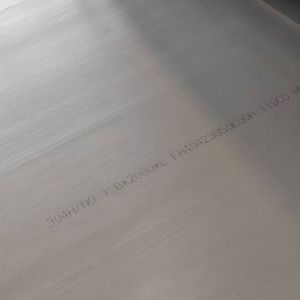
316H Stainless Steel Plates: Engineering Excellence for Extreme
Environments
316H stainless steel plates represent a specialized subset of
austenitic stainless steels, designed to thrive in applications
where high temperatures, corrosive chemicals, and structural
integrity converge. Unlike generic stainless steel plates, 316H
plates are tailored with a unique chemical composition that
amplifies both high-temperature strength and corrosion resistance,
making them indispensable in industries ranging from petrochemicals
to power generation. This detailed overview explores their
composition, manufacturing nuances, performance attributes, and
real-world applications, highlighting what sets them apart from
standard 316 plates and other alloys.
At the core of 316H plates’ durability is their precise alloy
makeup, which builds on the proven chemistry of 316 but with a
critical modification: carbon content. While standard 316 stainless
steel limits carbon to 0.08% maximum, 316H increases this range to
0.04–0.10%. This intentional boost serves a vital purpose: carbon
strengthens the material’s grain boundaries, preventing creep
(slow, permanent deformation under sustained stress) when exposed
to high temperatures— a common failure mode in industrial equipment
operating above 600°C (1112°F).
Beyond carbon, 316H plates retain the alloying elements that make
316 a staple in corrosive environments:
- Chromium (16.0–18.0%): Forms a passive oxide layer on the plate’s surface, shielding it
from oxidation and general corrosion. This layer self-heals if
scratched, ensuring long-term protection.
- Nickel (10.0–14.0%): Stabilizes the austenitic crystal structure, which grants 316H
its exceptional ductility and toughness, even at low temperatures.
This property is crucial for forming plates into complex shapes
without cracking.
- Molybdenum (2.0–3.0%): A defining element that elevates 316H above chromium-nickel
steels like 304. Molybdenum enhances resistance to pitting and
crevice corrosion, particularly in chloride-rich environments—think
seawater, brines, or chemical processing fluids.
- Trace elements, including manganese (2.0% max), silicon (0.75%
max), and phosphorus (0.045% max), further refine mechanical
properties, balancing formability with strength.
316H stainless steel plates are produced through a rigorous process
to ensure uniformity and performance. The journey begins with
melting high-purity raw materials in electric arc furnaces,
followed by refining to remove impurities like sulfur and oxygen.
Once the alloy reaches the desired composition, it undergoes hot
rolling—passing through rollers at temperatures exceeding 1100°C
(2012°F)—to form plates of varying thicknesses, typically ranging
from 1.5mm to 150mm, though custom sizes are available for
specialized projects.
Cold rolling may be employed for thinner plates (below 3mm) to
achieve tighter dimensional tolerances and a smoother surface
finish, critical for applications where hygiene or fluid flow
efficiency matters, such as in food processing or pharmaceutical
equipment. Post-rolling, plates undergo annealing—a heat treatment
process where they are heated to 1050–1150°C (1922–2102°F) and
rapidly cooled—to restore ductility and dissolve any harmful
precipitates that could weaken the material.
What distinguishes 316H plate manufacturing from standard 316 is
the strict control over carbon distribution. During annealing,
precise temperature regulation ensures carbon remains evenly
dispersed within the austenitic matrix, avoiding grain boundary
carbide precipitation that could compromise corrosion resistance.
This attention to detail makes 316H plates particularly reliable in
welded structures, where heat-affected zones (HAZs) are prone to
weakness.
316H plates excel in mechanical properties that matter for
structural applications. Their minimum tensile strength of 515 MPa
and yield strength of 205 MPa ensure they can withstand heavy
loads, while an elongation of 40% (minimum) allows for bending,
forming, and fabrication without fracturing. This combination of
strength and ductility makes them suitable for everything from
pressure vessels to structural supports in offshore platforms.
Where 316H plates truly stand out, however, is in their thermal
performance. Unlike standard 316, which may exhibit creep at
temperatures above 650°C (1202°F), 316H plates maintain structural
integrity up to 800°C (1472°F). Creep resistance is critical in
applications like boiler tubes, furnace liners, and turbine
components, where materials are subjected to constant stress at
high temperatures over years of operation. Tests show that 316H
plates experience less than 0.1% creep deformation after 10,000
hours at 700°C (1292°F) under a stress of 100 MPa—far outperforming
many other austenitic steels.
Thermal conductivity is another key attribute: 316H plates conduct
heat at a rate of 16.2 W/(m·K) at 100°C (212°F), making them
effective in heat exchangers where controlled thermal transfer is
essential. They also exhibit low thermal expansion (16.0 × 10⁻⁶/°C
between 0–100°C), reducing the risk of warping or cracking when
exposed to rapid temperature fluctuations—a common challenge in
industrial furnaces.
Corrosion resistance is the cornerstone of 316H plates’ appeal,
especially in aggressive environments. Their molybdenum content
makes them highly resistant to chloride-induced pitting—a form of
localized corrosion that can cause sudden failure in unprotected
metals. In salt spray tests, 316H plates show no signs of pitting
after 5,000 hours of exposure, compared to 304 plates, which may
exhibit pitting within 1,000 hours. This makes them ideal for
marine applications, such as ship hulls, propeller shafts, and
coastal infrastructure, where seawater immersion is constant.
They also resist corrosion in acidic and alkaline environments. In
sulfuric acid solutions (up to 5% concentration at 60°C/140°F),
316H plates corrode at a rate of less than 0.1 mm/year—slow enough
to ensure decades of service in chemical processing tanks and
pipelines. Similarly, in caustic soda (sodium hydroxide) solutions,
they outperform carbon steels, which corrode rapidly, and even some
nickel alloys, which can become brittle under prolonged exposure.
A unique advantage of 316H plates is their resistance to
intergranular corrosion (IGC), a type of degradation that attacks
grain boundaries. Thanks to their controlled carbon content and
annealing process, they pass the ASTM A262 Practice E test—a
rigorous standard for evaluating IGC resistance—making them safe
for use in high-purity applications like pharmaceutical reactors
and food processing equipment, where metal contamination could
compromise product quality.
316H stainless steel plates are the material of choice in
industries where failure is not an option. In the petrochemical sector, they line reactor vessels and transfer pipelines handling crude
oil, natural gas, and corrosive byproducts. Their ability to
withstand high pressures (up to 10,000 psi) and temperatures
(600–800°C) makes them indispensable in hydrocracking units, where
heavy hydrocarbons are broken down into lighter fuels.
In power generation, 316H plates form the heat exchanger tubes and boiler panels of
coal-fired, gas-fired, and nuclear power plants. Here, they endure
continuous exposure to superheated steam (up to 550°C/1022°F) and
combustion byproducts, including sulfur dioxide, without succumbing
to corrosion or creep.
The marine industry relies on 316H plates for offshore platforms, where they resist
saltwater, wave impact, and biofouling. They are also used in
desalination plants, where seawater is converted to freshwater—an
environment rich in chlorides that would quickly degrade lesser
materials.
Other applications include aerospace components (jet engine exhaust liners), industrial furnaces (retorts and heating elements), and pollution control equipment (scrubbers that remove acidic gases from industrial emissions). In
each case, 316H plates deliver a rare combination of strength,
longevity, and reliability that reduces maintenance costs and
extends equipment lifespans.
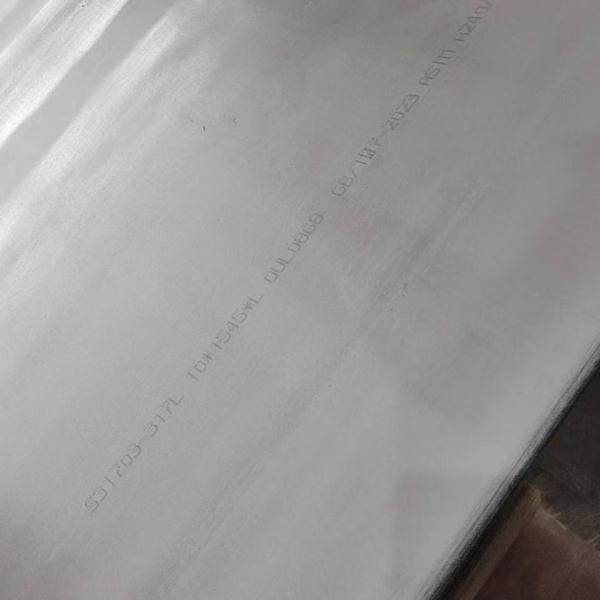

 201 304 316L Anti Slip Checkered Stainless Steel Sheet