| Sign In | Join Free | My benadorassociates.com |
|
| Sign In | Join Free | My benadorassociates.com |
|
| Categories | Stainless Steel Strip |
|---|---|
| Brand Name: | TISCO |
| Model Number: | 300 Series / 400 Series |
| Certification: | ISO |
| Place of Origin: | China |
| MOQ: | 2 Ton |
| Price: | 1500-2500 USD/Ton |
| Payment Terms: | L/C, T/T, Western Union |
| Supply Ability: | 20Ton per week |
| Delivery Time: | 5 - 12 days based on the quantity |
| Packaging Details: | standard packing for export |
| Products: | stainless steel strip |
| Thickness: | 0.5-8.0mm |
| Width: | within 1500mm |
| MOQ: | 500 kgs |
| Grade: | 200 series 300 series 300 series |
| Surface: | BA 2B NO.4 HL 8K NO.1 |
| Standard: | ASTM EN GB JIS |
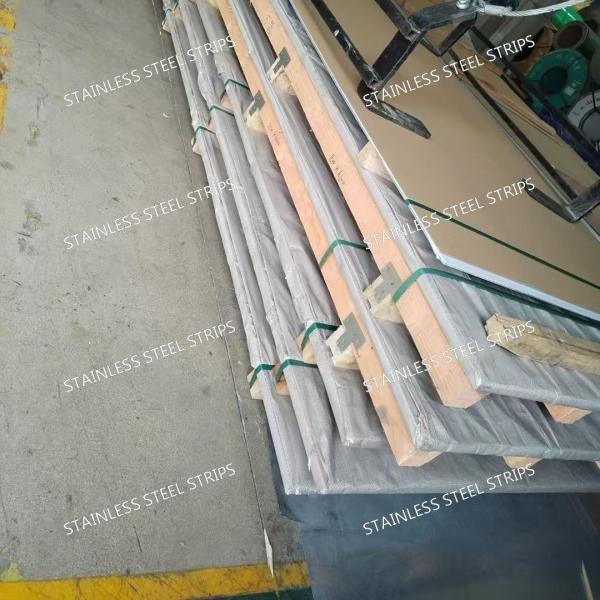
| Packing: | wooden frame and water proof paper |
| Company Info. |
| JIANGSU MITTEL STEEL INDUSTRIAL LIMITED |
| Verified Supplier |
| View Contact Details |
| Product List |
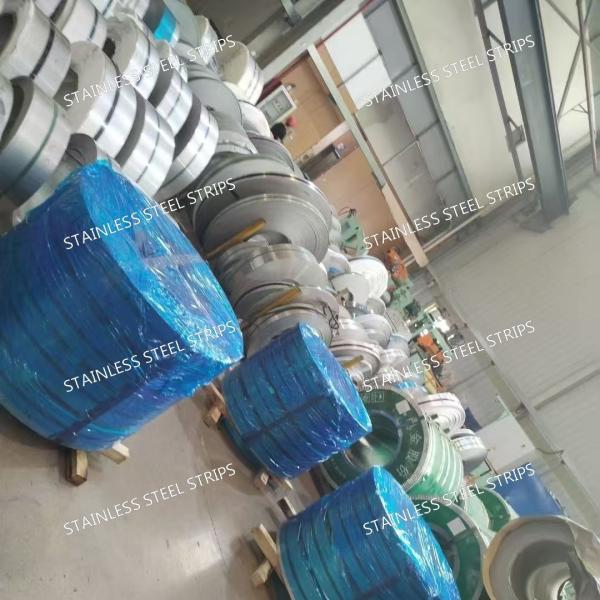
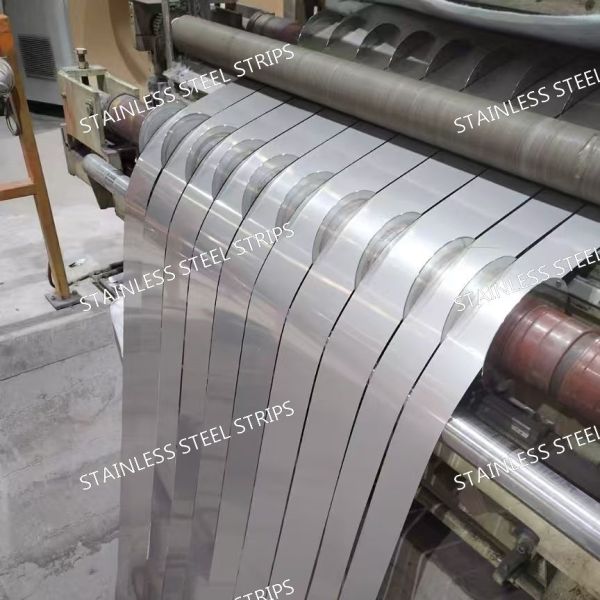
Cold Rolled Stainless Steel Strips Alloy 304/304L/304H SS Coils Slit Cutting Without Burr
Products Specification
| Product Name | Stainless Steel Strips |
| Length | As required |
| Width | 3mm-1219mm or as required |
| Thickness | 0.15 - 3.0mm or as required |
| Standard | AISI,ASTM,DIN,JIS,GB,JIS,SUS,EN,etc. |
| Technique | Hot rolled / cold rolled |
| Surface Treatment | 2B or according to customer requirement |
| Thickness tolerance | ±0.01mm |
| Material | 201, 202, 301, 302, 303, 304, 304L, 304H, 310S, 316, 316L, 317L, 321,310S 309S, 410, 410S,420, 430, 431,434, 440A,904L,2205,2507 |
| Application | It is widely used in high temperature applications, medical devices, building materials, chemistry, food industry, agriculture, ship components.It also applies to food, beverage packaging, kitchen supplies, trains, aircraft, conveyor belts, vehicles, bolts, nuts, springs, and screen. |
| MOQ | 1tons.We also can accept sample order. |
| Shipment time | Within 15-20 workdays after receiving deposit or L/C |
| Export packing | Waterproof paper, and steel strip packed.Standard Export Seaworthy Package.Suit for all kinds of transport,or as required |
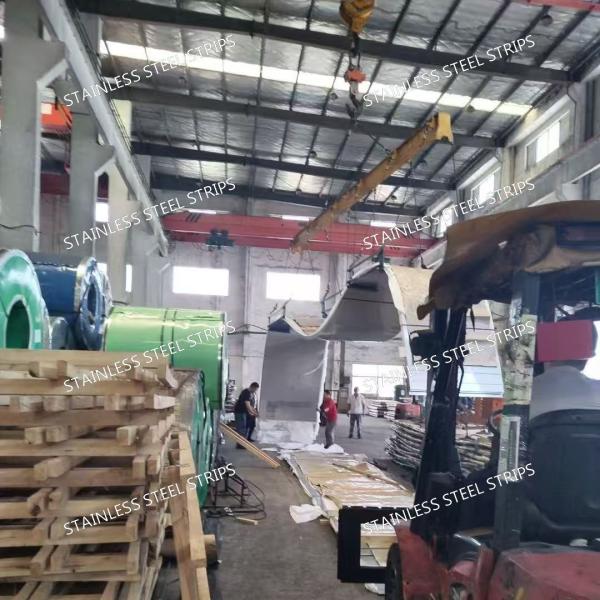
| Capacity | 250,000 tons/year |
Stainless steel strips are essential materials in various industries due to their corrosion resistance, formability, and mechanical strength. Among the most widely used grades are 304, 304L, and 304H stainless steel strips, which belong to the austenitic 300-series family. While they share a common chemical base of chromium (Cr) and nickel (Ni), their distinct carbon content and resulting properties make them suitable for different applications. This guide explores their key differences, chemical compositions, mechanical properties, and real-world uses, helping you make an informed choice for your industrial needs.
What Are 304, 304L, and 304H Stainless Steel Strips?
These grades are part of the austenitic stainless steel category, characterized by a face-centered cubic crystal structure that provides excellent ductility and non-magnetic properties (in their annealed state). The primary differentiator among them is carbon content, which significantly impacts their:
Key Differences: Chemical Composition
The table below outlines the ASTM-specified chemical compositions (by weight percentage) of the three grades:
Element | 304 Stainless Steel Strip (ASTM A240/A240M) | 304L Stainless Steel Strip (ASTM A240/A240M) | 304H Stainless Steel Strip (ASTM A240/A240M) |
Carbon (C) | ≤ 0.08% | ≤ 0.03% | 0.04–0.10% |
Chromium (Cr) | 18.0–20.0% | 18.0–20.0% | 17.0–19.0% |
Nickel (Ni) | 8.0–10.5% | 8.0–12.0% | 9.0–12.0% |
Manganese (Mn) | ≤ 2.0% | ≤ 2.0% | ≤ 2.0% |
Silicon (Si) | ≤ 1.0% | ≤ 1.0% | ≤ 1.0% |
Phosphorus (P) | ≤ 0.045% | ≤ 0.045% | ≤ 0.045% |
Sulfur (S) | ≤ 0.030% | ≤ 0.030% | ≤ 0.030% |
Key Takeaways from Chemical Composition:
Mechanical Properties Comparison
Below is a breakdown of their mechanical properties in the annealed condition:
Property | 304 | 304L | 304H |
Tensile Strength (MPa) | ≥ 515 | ≥ 485 | ≥ 515 |
Yield Strength (MPa) | ≥ 205 | ≥ 170 | ≥ 205 |
Elongation at Break (%) | ≥ 40 | ≥ 40 | ≥ 40 |
Hardness (HB) | ≤ 201 | ≤ 201 | ≤ 201 |
Density (g/cm³) | 7.93 | 7.93 | 7.93 |
Melting Point (°C) | 1398–1454 | 1398–1454 | 1398–1454 |
Key Observations:
Corrosion Resistance: How They Differ
All three grades exhibit excellent corrosion resistance in neutral or mildly corrosive environments (e.g., atmospheric exposure, water, or non-oxidizing acids). However, their performance varies in specific scenarios:
1. Welded Joints and Sensitization
2. Acid and Chloride Environments
3. Oxidizing Atmospheres
Weldability and Fabrication
Grade | Weldability Notes | Recommended Welding Processes |
304 | Good weldability; preheat not required. Risk of sensitization in thick sections. | TIG, MIG, spot welding, laser welding. |
304L | Excellent weldability. Low carbon eliminates sensitization in HAZ. No post-weld heat treatment needed. | Ideal for all welding processes, especially for thin sheets in corrosive service. |
304H | Good weldability but higher carbon may require post-weld annealing for high-temperature applications. | TIG/MIG with matching filler metal; ensure low-sulfur electrodes. |
High-Temperature Performance
When to Choose 304H?
Limitations of 304 and 304L at High Temperatures
Common Applications by Grade
1. 304 Stainless Steel Strip
2. 304L Stainless Steel Strip
3. 304H Stainless Steel Strip
How to Choose the Right Grade?
Keywords for Stainless Steel Strip Grades
Incorporate these keywords naturally for better search visibility:

|
 Bright Anneal 304 Stainless Steel Strip 1/4H 1/2H 3/4H FH Stainless Steel Roll 1.4301
EN 1.4571 Stainless Steel Metal Strip AISI 316Ti Cold Rolled
ASTM A240 Stainless Steel Strip Roll AISI317L EN 1.4438
Heat Resistant 309S Stainless Metal Strips AISI EN 1.4833
Soft Anneal AISI 301 Stainless Steel Strip 0.1-2.0mm
High Hardness SS Strip Coil 17-7PH Bright Anneal EN 1.4568
A240 904L ASTM Stainless Steel Strip EN 1.4539 0.1-3.0mm
Cold Rolled Hot Rolled 201 Stainless Slit Coil 200 Series 300 Series
2D Finishing SS Strip Coil 436L 0.5-2.0mm JIS G4304 For Auto Exhaust System
0.4-14.0mm Stainless Steel Strip EN ASTM 321 Cold Rolled Hot Rolled
Bright Anneal 304 Stainless Steel Strip 1/4H 1/2H 3/4H FH Stainless Steel Roll 1.4301
EN 1.4571 Stainless Steel Metal Strip AISI 316Ti Cold Rolled
ASTM A240 Stainless Steel Strip Roll AISI317L EN 1.4438
Heat Resistant 309S Stainless Metal Strips AISI EN 1.4833
Soft Anneal AISI 301 Stainless Steel Strip 0.1-2.0mm
High Hardness SS Strip Coil 17-7PH Bright Anneal EN 1.4568
A240 904L ASTM Stainless Steel Strip EN 1.4539 0.1-3.0mm
Cold Rolled Hot Rolled 201 Stainless Slit Coil 200 Series 300 Series
2D Finishing SS Strip Coil 436L 0.5-2.0mm JIS G4304 For Auto Exhaust System
0.4-14.0mm Stainless Steel Strip EN ASTM 321 Cold Rolled Hot Rolled

