| Sign In | Join Free | My benadorassociates.com |
|
| Sign In | Join Free | My benadorassociates.com |
|
| Categories | Car AC Compressor |
|---|---|
| Brand Name: | WNRLN |
| Model Number: | WXTK178 |
| Certification: | SGS/ISO9001 |
| Place of Origin: | Guangdong, China |
| MOQ: | Negotiable |
| Price: | Negotiable |
| Payment Terms: | Western Union, L/C, T/T, MoneyGram, PayPal |
| Supply Ability: | 50000pcs per month |
| Delivery Time: | 10-30 Days |
| Packaging Details: | Neutral packing /WNRLN packing/Customized packing |
| Item No.: | WXTK178 |
| Car make: | For Kubota For M6 For M135 For Daihatsu For Hijet |
| Year Model: | 2001-2014 |
| Voltage: | 12V |
| Size: | Standard size |
| Grooves: | 6PK |
| Compressor type: | SV07E |
| OEM: | 2012412AM/4472803050/3P90396110/4472803080/4472803050 |
| Company Info. |
| Guangzhou Weixing Automobile Fitting Co.,Ltd. |
| Verified Supplier |
| View Contact Details |
| Product List |
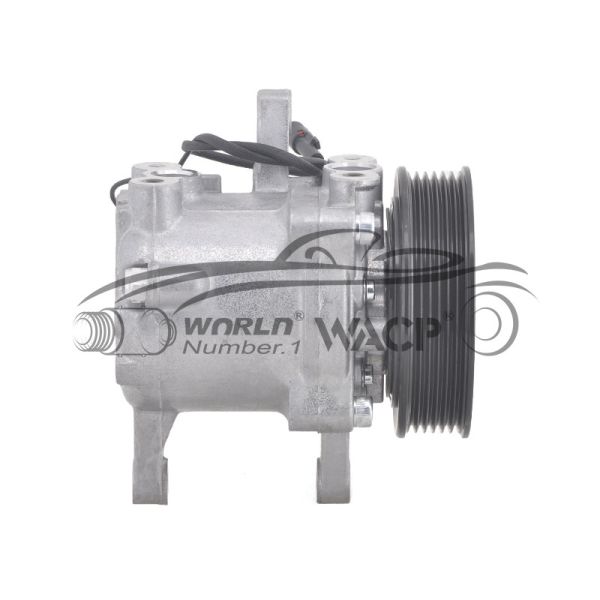
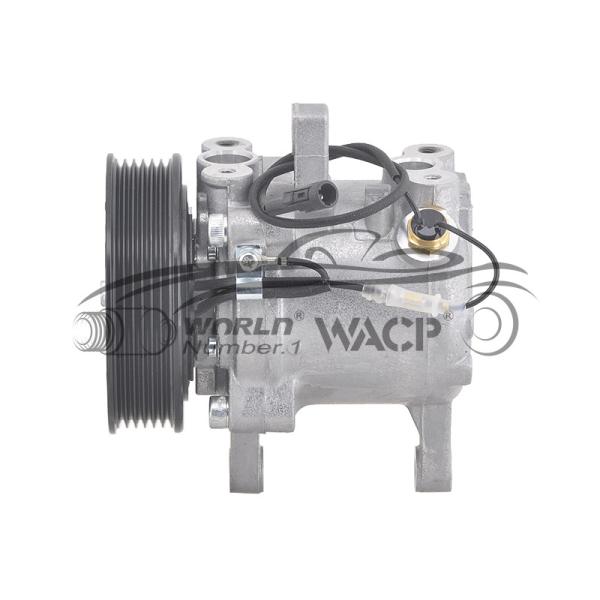
2012412AM 4472803050 3P90396110 12V Auto Parts AC Compressor For Kubota WXTK178
Parameter:
| Model Number | WXTK178 |
| Car Model | For Kubota For M6 For M135 For Daihatsu For Hijet |
| Compressor model | SV07E 6PK |
| Type | Air Conditioner Compressor |
| Year Model | 2001-2014 |
| OE No. | 2012412AM/4472803050/3P90396110/4472803080/4472803050 |
Pictures
Testing the functionality of AC conditioning compressor
Check for Physical Damage: Inspect the compressor for cracks, leaks, or signs of wear on the housing, hoses, and connections.
Inspect Belts and Pulleys: Ensure the compressor belt is not worn, cracked, or loose. Check the pulley for smooth rotation and proper alignment.
Look for Oil Stains: Oil stains around the compressor or A/C lines may indicate a refrigerant leak.
Test the Clutch:
Turn on the A/C system and observe if the compressor clutch engages (you should hear a click and see the clutch plate move).
If the clutch does not engage, check the power supply, fuses, relays, and wiring for faults.
Measure Voltage: Use a multimeter to check the voltage at the compressor clutch connector. It should match the vehicle’s system voltage (typically 12V).
Check Ground Connection: Ensure the compressor has a proper ground connection.
Connect Manifold Gauges: Attach a manifold gauge set to the high-pressure and low-pressure service ports on the A/C system.
Measure Pressure:
Start the engine and turn the A/C to the maximum cooling setting.
Compare the pressure readings (low-side and high-side) with the manufacturer’s specifications.
Abnormal pressure readings (too high or too low) may indicate a problem with the compressor or other components (e.g., clogged expansion valve, refrigerant overcharge, or undercharge).
Check for Pressure Balance: Turn off the engine and observe if the high-side and low-side pressures equalize. If they do not, the compressor’s internal valves may be faulty.
Cooling Efficiency: Run the A/C system and measure the temperature of the air coming from the vents. It should be significantly cooler than the ambient temperature (typically 8–15°C or 45–60°F at the vents).
Listen for Unusual Noises: Strange noises (e.g., grinding, rattling, or squealing) may indicate internal compressor damage or bearing failure.
Monitor Compressor Operation: Ensure the compressor cycles on and off at regular intervals. Continuous operation or failure to cycle may indicate a problem.
Use a Refrigerant Leak Detector: Check for leaks around the compressor seals, hoses, and connections.
UV Dye Test: Add UV dye to the refrigerant and use a UV light to detect leaks.
Soap Solution Test: Apply a soapy water solution to connections and look for bubbles, which indicate leaks.
Inspect Oil Level: The compressor requires the correct amount of oil for lubrication. Too little oil can cause overheating, while too much oil can reduce cooling efficiency.
Check for Contamination: If the oil appears dirty or contains metal particles, the compressor may be damaged internally.
Belt Tension: Ensure the belt driving the compressor is properly tensioned. A loose belt can cause slippage, while an overtightened belt can damage the compressor bearings.
Pulley Rotation: With the engine off, manually rotate the compressor pulley to check for smooth operation. Resistance or grinding noises may indicate bearing failure.
Scan for Error Codes: Use an OBD-II scanner to check for any A/C-related error codes stored in the vehicle’s computer.
Check Refrigerant Levels: Use a refrigerant scale to ensure the system has the correct amount of refrigerant. Overcharging or undercharging can affect compressor performance.
Compressor Not Engaging: Could be due to low refrigerant, electrical faults, or a faulty clutch.
Poor Cooling Performance: May indicate a failing compressor, low refrigerant, or a clogged system.
Excessive Noise: Often caused by internal compressor damage or bearing failure.
Refrigerant Leaks: Commonly occur at seals, hoses, or connections.


|
 977011S400 Automobile Air Conditioning System Car AC Compressor For Kia Rio WXKA087
1997-2005 Vehicle Compressor For Audi A4、A6/A8 C5 For Skoda DCP02004 4471009440 WXAD002
9770126010 Car Auto Ac Compressor For Hyundai Santafe For Trajet For Kia Magentis WXHY016
12V Car Air Compressor 10PA17E For Hyundai For Accent For Elantra For Matrix 2000-2010
ACP1550000S Car AC Compressor For Kia K3 For Sportage DW16 6PK WXKA025
Car Air Conditioner Compressor 2600VB80 For Nissan Patrol For Pathfinder WXNS042
12V Car Ac Compressor 92600VZ00A For Nissan Urvan E25 3.0 WXNS061
DKS17 4PK Automobile Air Conditioning For Compressor Hongqi
19192950 Air Conditioning Auto Ac Compressor For Isuzu 600P 12V WXIZ003
97701R9000 Car Air Conditioning Compressor 97701L4000 For Hyundai Santa For Kia KX3 WXHY112
977011S400 Automobile Air Conditioning System Car AC Compressor For Kia Rio WXKA087
1997-2005 Vehicle Compressor For Audi A4、A6/A8 C5 For Skoda DCP02004 4471009440 WXAD002
9770126010 Car Auto Ac Compressor For Hyundai Santafe For Trajet For Kia Magentis WXHY016
12V Car Air Compressor 10PA17E For Hyundai For Accent For Elantra For Matrix 2000-2010
ACP1550000S Car AC Compressor For Kia K3 For Sportage DW16 6PK WXKA025
Car Air Conditioner Compressor 2600VB80 For Nissan Patrol For Pathfinder WXNS042
12V Car Ac Compressor 92600VZ00A For Nissan Urvan E25 3.0 WXNS061
DKS17 4PK Automobile Air Conditioning For Compressor Hongqi
19192950 Air Conditioning Auto Ac Compressor For Isuzu 600P 12V WXIZ003
97701R9000 Car Air Conditioning Compressor 97701L4000 For Hyundai Santa For Kia KX3 WXHY112

