| Sign In | Join Free | My benadorassociates.com |
|
| Sign In | Join Free | My benadorassociates.com |
|
| Categories | VPSA Oxygen Generator |
|---|---|
| Brand Name: | GNEE |
| Certification: | SGS |
| Place of Origin: | CHINA |
| MOQ: | ≥1sets |
| Payment Terms: | L/C,D/A,D/P,T/T,Western Union,MoneyGram |
| Supply Ability: | 25 every month |
| Packaging Details: | Wooden Box / Outer shell packaging / Cylindrical packaging / Airbag packaging/nude packing/Sea or land transportation |
| Other Name: | VPSA Oxygen Equipment |
| Oxygen Purity: | 93%-95% |
| Production Rate: | 100~10000Nm3/h |
| Outer Vessel Material: | Carbon Steel |
| Operatingpressure: | 0.2 - 0.5 MPa |
| Machinery Test Report: | Provided |
| Length: | 6058mm |
| Output Pressure: | 10-15Kap or as user's requirement |
| Operate Power: | 1 KW |
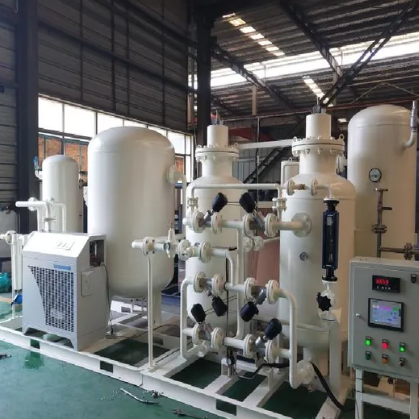
| Productname: | VPSA Oxygen Generator |
| Feedstock: | Air |
| Work Pressure: | 10-15Kap or as user's requirement |
| Company Info. |
| Henan Gnee New Materials Co., Ltd. |
| Verified Supplier |
| View Contact Details |
| Product List |
Model | N2 Flow (Nm3/h) | Effect Air Consumption(Nm3/min) | ||||
95% | 98% | 99% | 99.9% | 99.99% | ||
VPSA-5 | 5 | 0.3 | 0.25 | 0.27 | 0.4 | 0.6 |
VPSA-10 | 10 | 0.55 | 0.48 | 0.52 | 0.73 | 1.2 |
VPSA-20 | 20 | 1.2 | 0.98 | 1.1 | 1.4 | 2.4 |
VPSA-30 | 30 | 1.65 | 1.36 | 1.52 | 2.1 | 3.9 |
VPSN-50 | 50 | 2.85 | 2.4 | 2.58 | 4.35 | 6.6 |
VPSA-100 | 100 | 5.5 | 4.8 | 5.2 | 6.8 | 13.1 |
VPSA-150 | 150 | 8.25 | 7.5 | 7.83 | 10.2 | 19 |
VPSA-200 | 200 | 11 | 9.8 | 10.9 | 13.6 | 25.8 |
VPSA-300 | 300 | 16.5 | 14.5 | 15 | 20.4 | 39 |
VPSA-400 | 400 | 22 | 19.2 | 20.5 | 27.2 | 49.5 |
VPSA-500 | 500 | 27.5 | 24 | 25.5 | 34 | 63 |
VPSA-600 | 600 | 33 | 28.8 | 30.2 | 40.8 | 78 |
VPSA-800 | 800 | 45 | 36.4 | 40.1 | 55 | 103 |
VPSA-1000 | 1000 | 55 | 48 | 50.7 | 68 | - |
VPSA-1500 | 1500 | 85 | 70 | 74.8 | 103 | - |
VPSA-2000 | 2000 | 110 | 93 | 103 | - | - |


|
 20-50Nm3/h VPSA Oxygen Generator with 100-10000Nm3/h Flow Rate and 0.5bar-100bar Pressure for Industrial Medical Use
93%±2% Purity 600m2 VPSA Oxygen Generator with 0.5-1.5 kW/Nm3 Power Consumption for Industrial Use
Intelligent Control VPSA Oxygen Generator with Modular Design and Long Service Life for Industrial Use
High Purity VPSA Oxygen Generator Plant with 1500Nm3/H Capacity and 50Hz/60Hz Frequency for Industrial Use
Energy-saving VPSA Oxygen Generator with Small Floor Area and Stainless Steel Inner Material for Efficient Oxygen Production
VPSA Oxygen Generator with 1 Year Maintenance Interval Vertical Placement and Cylindrical Shape for Industrial and Medical Use
5-5000Nm3/H VPSA Oxygen Generator with 95% Filling Rate and 6058mm Length for Ambient Temperature Applications
80Nm3/H VPSA Oxygen Generator with Vacuum Pressure Swing Adsorption Technology for Automatic Operation and Adjustable Pressure
Industrial VPSA Oxygen Generator with 220v/380v/50-60hz Voltage for Continuous Operation and Carbon Steel Outer Vessel
Customized VPSA Oxygen Generator with 1-10 bar Pressure Range and 1 Year Warranty for Industrial Use
20-50Nm3/h VPSA Oxygen Generator with 100-10000Nm3/h Flow Rate and 0.5bar-100bar Pressure for Industrial Medical Use
93%±2% Purity 600m2 VPSA Oxygen Generator with 0.5-1.5 kW/Nm3 Power Consumption for Industrial Use
Intelligent Control VPSA Oxygen Generator with Modular Design and Long Service Life for Industrial Use
High Purity VPSA Oxygen Generator Plant with 1500Nm3/H Capacity and 50Hz/60Hz Frequency for Industrial Use
Energy-saving VPSA Oxygen Generator with Small Floor Area and Stainless Steel Inner Material for Efficient Oxygen Production
VPSA Oxygen Generator with 1 Year Maintenance Interval Vertical Placement and Cylindrical Shape for Industrial and Medical Use
5-5000Nm3/H VPSA Oxygen Generator with 95% Filling Rate and 6058mm Length for Ambient Temperature Applications
80Nm3/H VPSA Oxygen Generator with Vacuum Pressure Swing Adsorption Technology for Automatic Operation and Adjustable Pressure
Industrial VPSA Oxygen Generator with 220v/380v/50-60hz Voltage for Continuous Operation and Carbon Steel Outer Vessel
Customized VPSA Oxygen Generator with 1-10 bar Pressure Range and 1 Year Warranty for Industrial Use

