| Sign In | Join Free | My benadorassociates.com |
|
| Sign In | Join Free | My benadorassociates.com |
|
| Categories | Planetary Ball Mill Machine |
|---|---|
| Brand Name: | Zoli |
| Model Number: | XQM |
| Certification: | ISO9001 CE |
| Place of Origin: | China |
| MOQ: | 1 set |
| Payment Terms: | L/C,T/T,Western Union |
| Supply Ability: | 200 units per month |
| Delivery Time: | within 15days |
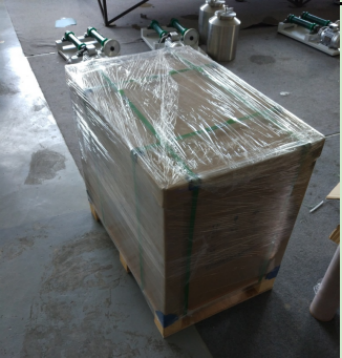
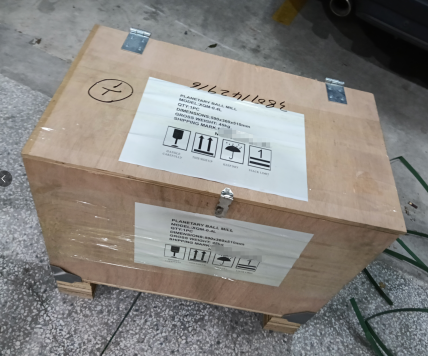
| Packaging Details: | carton+wood |
| Grinding Speed Range: | 200-1200 rpm |
| Feeding Granularity: | <=1mm |
| Speed Ratio: | 1:2 |
| Min Speed: | 50 rpm |
| Grinding Balls Size: | 10 mm |
| Numberofgrindingstations: | 2 |
| Rotationdirection: | Reversible |
| Grinding Jar Type: | 4 Jars |
| Machineweight: | 45 kg |
| Grinding Ball Material: | Zirconium Oxide |
| Numberofgrindingjars: | 2 |
| Grinding Stations: | 2 |
| Timer: | 0-99 hours |
| Grinding Ball Diameter: | 3mm, 5mm, 10mm |
| Frequency: | 50Hz |
| Company Info. |
| Guangzhou Zoli Technology Co.,Ltd. |
| Verified Supplier |
| View Contact Details |
| Product List |
Integrated Conceptual Overview
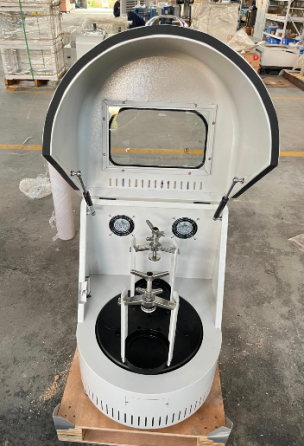
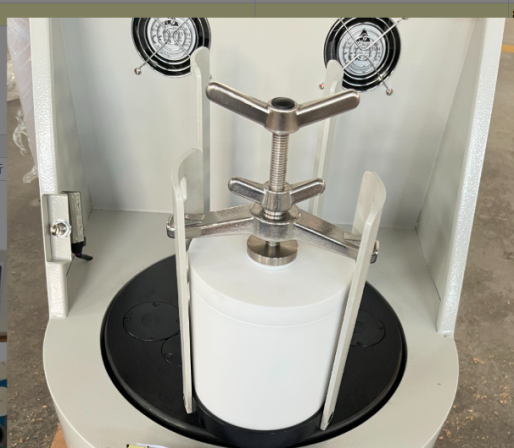
This describes a compact, vertical planetary ball mill specifically configured as a mineral crushing and grinding machine for laboratories. It highlights the use of agate components to pulverize soil and geological samples without contamination, making it a precision instrument for geochemistry and materials analysis.
1. Core Technology: "Planetary Ball Mill"
Principle: As established, this uses high-energy impacts from balls inside jars that rotate on their own axis while revolving around a central point. This is the most efficient method for rapid fine-grinding of brittle materials like minerals and soils.
2. Primary Application & Configuration: "Micro Soil Agate Sample Pulverizer"
This phrase is the most application-specific part of the description.
"Micro Soil" / "Sample": Indicates the mill is designed for processing small quantities of soil, sediment, or rock—typical in research where only a few grams are available for analysis.
"Agate": This is the critical specification. It means the grinding jars and balls are made from Agate (a natural form of SiO₂).
Why Agate for Soil? Agate is exceptionally hard (~7 Mohs) and, most importantly, chemically inert. For soil and mineral analysis, avoiding metallic contamination (e.g., from iron or chromium in steel jars) is paramount for accurate results in techniques like ICP-MS (Inductively Coupled Plasma Mass Spectrometry). Agate ensures the sample's elemental composition remains pure.
"Pulverizer": A term often used in geology and mining for a machine that reduces a sample to a fine, homogeneous powder.
3. Physical Design & Scope: "Small Vertical Laboratory Mineral Crushing and Grinding Machine"
"Small Vertical Laboratory": Confirms this is a space-saving, benchtop instrument with a vertical orientation for a compact footprint and stable operation.
"Mineral Crushing and Grinding": Defines its purpose. While "crushing" often refers to coarse size reduction and "grinding" to fine, a planetary ball mill is capable of both in a single process, taking small rock chips and turning them into a fine powder.
Typical Workflow and Importance
Scenario: Preparing a rock sample for geochemical analysis.
Crushing: A small rock core is first broken into smaller chips (~1-5 mm) using a hydraulic press or hammer.
Loading: These chips are placed into an Agate grinding jar with several Agate grinding balls.
Pulverizing: The jar is sealed and mounted on the vertical planetary mill. It runs at high speed for a set time.
Result: The output is an ultra-fine, perfectly homogeneous powder where every particle is representative of the original rock.
Analysis: This powder is then used for precise analysis via XRF, XRD, or ICP-MS to determine its elemental and mineralogical composition.
The use of Agate is non-negotiable in this workflow to prevent the introduction of trace metals that would completely invalidate the analytical results.
Product Images

|
 Compact Micro Planetary Ball Mill Machine For Alloy Nanoparticles 110V
XQM-4L Experimental Vertical Planetary Ball Mill
nano-scale powder ceramic planetary ball mill small rapid laboratory ball mill
Laboratory small planetary ball mill,dry and wet pulverizer, nano sample preparation,silent soil grinding
ZOLI Bench-top Size Designed For Laboratory Research And Development
High Energy Laboratory Planetary Small Sample Preparation Grinding Machine
Compact Laboratory Planetary Ball Mill Emi-circular Grinding Jar Design
Versatile And High-performance 1L Laboratory Nano-Scale Ball Mill With 100ml Zirconia Tank
Planetary Ball Mill with Zirconia Tank Precision Laboratory Grinding Instrument
Planetary Ball Mill Small Laboratory Dry And Wet Dual-purpose Agate Grinding Jar
Compact Micro Planetary Ball Mill Machine For Alloy Nanoparticles 110V
XQM-4L Experimental Vertical Planetary Ball Mill
nano-scale powder ceramic planetary ball mill small rapid laboratory ball mill
Laboratory small planetary ball mill,dry and wet pulverizer, nano sample preparation,silent soil grinding
ZOLI Bench-top Size Designed For Laboratory Research And Development
High Energy Laboratory Planetary Small Sample Preparation Grinding Machine
Compact Laboratory Planetary Ball Mill Emi-circular Grinding Jar Design
Versatile And High-performance 1L Laboratory Nano-Scale Ball Mill With 100ml Zirconia Tank
Planetary Ball Mill with Zirconia Tank Precision Laboratory Grinding Instrument
Planetary Ball Mill Small Laboratory Dry And Wet Dual-purpose Agate Grinding Jar

