| Sign In | Join Free | My benadorassociates.com |
|
| Sign In | Join Free | My benadorassociates.com |
|
| Categories | Resistance Wire |
|---|---|
| Brand Name: | DLX |
| Model Number: | Nichrome Wire Cr20Ni35 |
| Certification: | Ce,Rohs |
| Place of Origin: | China,Jiangsu |
| MOQ: | 10kg |
| Payment Terms: | L/C,D/A,D/P,T/T,Western Union |
| Supply Ability: | 500 tons per month |
| Delivery Time: | 7-10 work days |
| Company Info. |
| Changzhou DLX Alloy Co., Ltd. |
| Verified Supplier |
| View Contact Details |
| Product List |

As the world transitions toward renewable energy solutions, hydrogen production via electrolysis is becoming a key technology in the clean energy revolution. Water electrolysis, which splits water molecules into hydrogen and oxygen using electrical energy, holds immense potential for producing green hydrogen—an essential component for reducing carbon emissions. To optimize this process, high-quality materials are required, particularly for the electrodes used in electrolyzers. Cr20Ni35 Resistance Wire is a leading material choice for the hydrogen production industry, offering long-term sustainability, efficiency, and durability.
At DLX, we provide Cr20Ni35 Resistance Wire, a specialized alloy that enhances the performance and lifespan of electrolysis systems. With its unique combination of heat resistance, corrosion resistance, and electrical conductivity, Cr20Ni35 Resistance Wire ensures that your electrolytic hydrogen production systems are both reliable and cost-effective, supporting your green energy initiatives for the long term.
Cr20Ni35 Resistance Wire is an advanced alloy made from 20% chromium, 35% nickel, and the remaining composition of iron. This alloy is specifically designed for high-temperature applications, making it ideal for use in electrolysis systems where electrical currents, heat, and corrosive conditions are prevalent.
The wire's composition provides excellent resistance to oxidation and corrosion, ensuring that it maintains its integrity even in the harsh environments found in water electrolysis processes. When used as an electrode material in electrolyzers, Cr20Ni35 Resistance Wire plays a critical role in facilitating the efficient generation of hydrogen while ensuring the longevity of the system.
| Performance material | Cr10Ni90 | Cr20Ni80 | Cr30Ni70 | Cr15Ni60 | Cr20Ni35 | Cr20Ni30 |
|---|---|---|---|---|---|---|
| Composition | Ni: 90 Cr: 10 Fe: ≤1.0 | Ni: Rest Cr: 20.0-23.0 Fe: ≤1.0 | Ni: Rest Cr: 28.0-31.0 Fe: Rest | Ni: 55.0-61.0 Cr: 15.0-18.0 Fe: Rest | Ni: 34.0-37.0 Cr: 18.0-21.0 Fe: Rest | Ni: 30.0-34.0 Cr: 18.0-21.0 Fe: Rest |
| Maximum temperature ℃ | 1300 | 1200 | 1250 | 1150 | 1100 | 1100 |
| Melting point ℃ | 1400 | 1400 | 1380 | 1390 | 1390 | 1390 |
| Density g/cm³ | 8.7 | 8.4 | 8.1 | 8.2 | 7.9 | 7.9 |
| Resistivity(μΩ*m,20℃) | 1.09±0.05 | 1.18±0.05 | 1.12±0.05 | 1.00±0.05 | 1.04±0.05 | |
| Elongation at rupture | ≥20 | ≥20 | ≥20 | ≥20 | ≥20 | ≥20 |
| Specific heat(J/g.℃) | 0.44 | 0.44 | 0.44 | 0.44 | 0.44 | |
| Thermal conductivity(KJ/m.h℃) | 60.3 | 45.2 | 45.2 | 43.8 | 43.8 | |
| Coefficient of linear expansion (20-1000℃) | 18 | 17 | 17 | 19 | 19 | |
| Micrographic structure | Austenite | Austenite | Austenite | Austenite | Austenite | |
| Magnetic properties | Nonmagnetic | Nonmagnetic | Nonmagnetic | Nonmagnetic | Nonmagnetic |


Hydrogen is increasingly being viewed as a clean and versatile energy carrier that can play a critical role in decarbonizing various sectors, including transportation, industry, and power generation. Green hydrogen, produced through water electrolysis powered by renewable energy sources like wind and solar, is a key part of this vision. As demand for green hydrogen grows, the need for efficient, durable, and cost-effective materials for electrolysis systems becomes even more crucial.
The global hydrogen market is expected to expand rapidly as governments and industries prioritize decarbonization and sustainable energy solutions. Electrolysis systems that use Cr20Ni35 Resistance Wire are well-positioned to meet the increasing demand for hydrogen, offering high performance and longevity in the face of rising industry expectations.
As the energy transition accelerates, hydrogen production via electrolysis is set to become more widespread, driven by the need for renewable energy storage solutions, clean transportation, and industrial decarbonization.
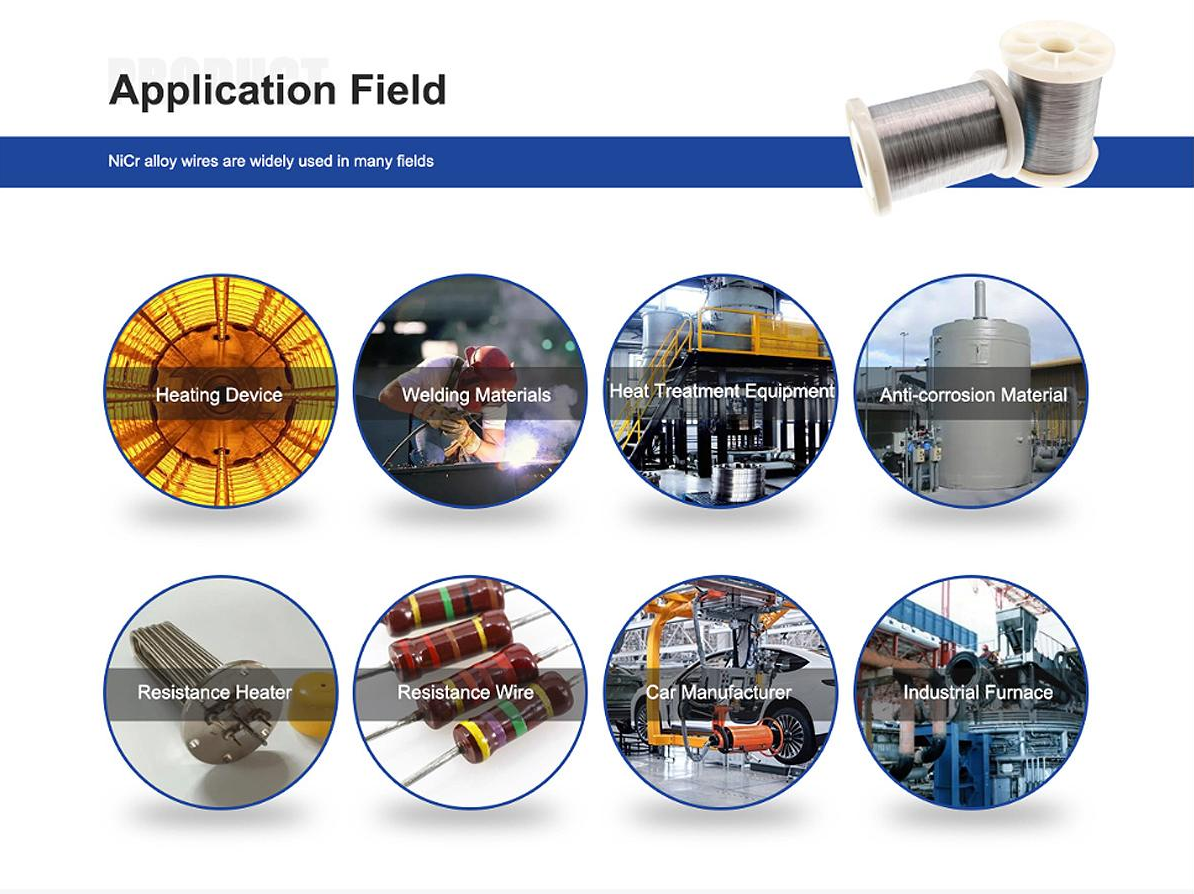

DLX differentiates itself by offering Cr20Ni35 Resistance Wire engineered specifically for the demanding conditions of hydrogen production via electrolysis. While other suppliers may offer similar materials, DLX provides high-performance, custom-tailored solutions designed to optimize the efficiency and longevity of your electrolysis systems.
Unlike competitors, DLX ensures that every Cr20Ni35 Resistance Wire product is subjected to rigorous quality control testing, ensuring top-notch performance and durability. Additionally, we offer fast, global delivery and expert consultation, ensuring you get the best material for your electrolysis system.


|
 Cr10Ni90 Nichrome Wire for Sustainable Hydrogen Generation via Electrolysis
Durable Cr10Ni90 Wire for Large-Scale Electrolytic Hydrogen Production
Cr20Ni80 Nichrome Wire for Reliable Hydrogen Electrolysis Applications
High-Performance Cr20Ni80 Resistance Wire for Water Splitting Hydrogen Generation
Cr20Ni80 Alloy Wire for Optimal Electrolytic Hydrogen Production
Long-Lasting Cr20Ni80 Nichrome Wire for Efficient Electrolysis Systems
Cr20Ni80 Wire for Electrolytic Hydrogen Production in Renewable Energy Solutions
Cr30Ni70 Nichrome Wire for Efficient Hydrogen Production in Electrolysis
Cr30Ni70 Alloy Wire for Cost-Effective Electrolytic Hydrogen Generation
Reliable Cr30Ni70 Resistance Wire for Water Electrolysis Systems
Cr10Ni90 Nichrome Wire for Sustainable Hydrogen Generation via Electrolysis
Durable Cr10Ni90 Wire for Large-Scale Electrolytic Hydrogen Production
Cr20Ni80 Nichrome Wire for Reliable Hydrogen Electrolysis Applications
High-Performance Cr20Ni80 Resistance Wire for Water Splitting Hydrogen Generation
Cr20Ni80 Alloy Wire for Optimal Electrolytic Hydrogen Production
Long-Lasting Cr20Ni80 Nichrome Wire for Efficient Electrolysis Systems
Cr20Ni80 Wire for Electrolytic Hydrogen Production in Renewable Energy Solutions
Cr30Ni70 Nichrome Wire for Efficient Hydrogen Production in Electrolysis
Cr30Ni70 Alloy Wire for Cost-Effective Electrolytic Hydrogen Generation
Reliable Cr30Ni70 Resistance Wire for Water Electrolysis Systems

