Durable MDI Prepolymer Binder: Two-Component Polyurethane Adhesive
High-performance bonding solution for automotive seat cushions,
interior parts, sound insulation materials, and composite building
products. Certified ROHS and SGS compliant for sports, recreation,
and waterborne applications.
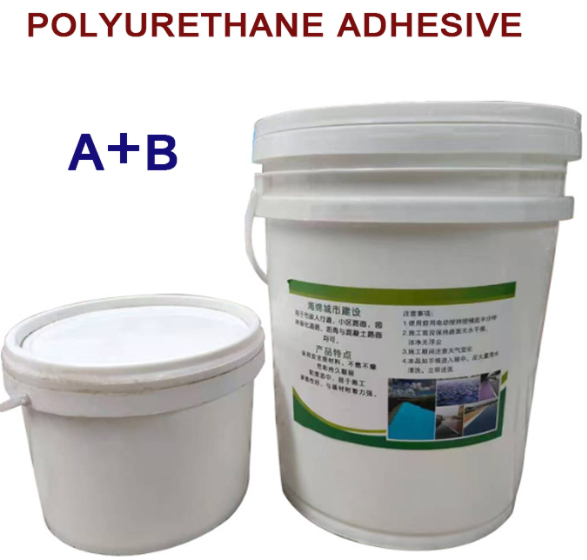
Product Overview
This polyurethane adhesive series integrates European and American
technologies with domestic market needs, specifically engineered
for high performance and environmental sustainability. It is
completely VOC-free and certified to meet international standards
including SGS, EU/ROHS, phthalate tests, and Shenzhen's "Quality
Control Standard for Synthetic Material Sports Surface Layers."

Technical Specifications
| | |
| Product Series | Sponge soundproofing and noise reduction Two-component polyurethane
adhesive |
| model | RF100-80 |
| color | Colorless |
| Viscosity cps | 250 |
| density (25 °C) | 1.1 |
| flash point | >200℃ |
| Application scenarios | It is used for the recovery of sponge particles to produce molded
foam products. |
| Product features | High cost performance |
|
|
Superior Bonding Performance
Advanced polyurethane adhesive offering exceptional flexibility,
durability, and temperature resistance for demanding structural
applications. The resilient bond layer effectively absorbs shocks
and accommodates movement, making it ideal for bonding substrates
with different thermal expansion coefficients.

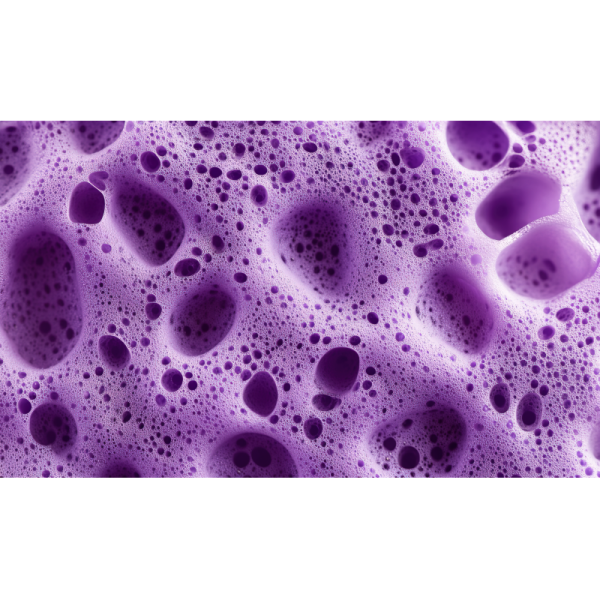
Manufacturing Process: Transforming Crushed Sponge into
High-Performance Products
Our two-component polyurethane binder is the essential ingredient
for creating durable, functional, and sustainable products from
recycled foam through the rebonding process.

Step 1: Raw Material Preparation (Crushing & Sieving)
Collect post-industrial or post-consumer polyurethane foam scraps
and feed them into a shredder to break down into smaller, uniform
pieces. Sieve to separate into different size grades for desired
density and texture.
Step 2: Weighing & Mixing
Precisely weigh crushed foam and place into rotating drum mixer.
Add our high-performance urethane binder system consisting of Part
A (polyol side with catalysts) and Part B (MDI prepolymer curing
agent) in specific ratios for even distribution.
Step 3: Molding & Forming
Pour the mixed material into open molds defining final product
shapes for underlayment, automotive padding, or blocks for slicing.
Spread evenly for consistent density.
Step 4: Pressing & Curing
Transfer filled mold to heated platen press applying significant
heat and pressure to activate binder chemical reaction, compact
material by squeezing out air pockets, and set final shape
dimensions.
Step 5: Demolding & Cooling
Remove newly formed product from press and mold after curing cycle,
then place on cooling rack to stabilize at room temperature.
Step 6: Finishing & Fabrication
Cooled rebonded foam slabs undergo secondary processes including
slicing into thinner sheets, die-cutting precise shapes, or
laminating with other materials like fabric or film.
Step 7: Final Product Application
Finished rebonded foam products are ready for diverse applications
including construction acoustic panels, automotive padding, home
underlays, gym mats, and packaging inserts.
By using our Urethane Binder in this process, manufacturers can create high-value, eco-friendly
products that meet strict performance requirements for durability,
comfort, and sound absorption.


Application Areas
- Insulated box cars and trains
- Composite sandwich panels
- Cleanrooms, cleanroom metal partitions and ceilings
- Composite PU board, rock wool board, paper honeycomb board,
aluminum honeycomb board, gypsum board
- Marine partition boards, composite rock wool board
- Curtain walls: Aluminum honeycomb panel, stone honeycomb panel,
stone composite panel
Manufacturing Process of Soundproofing Building Materials
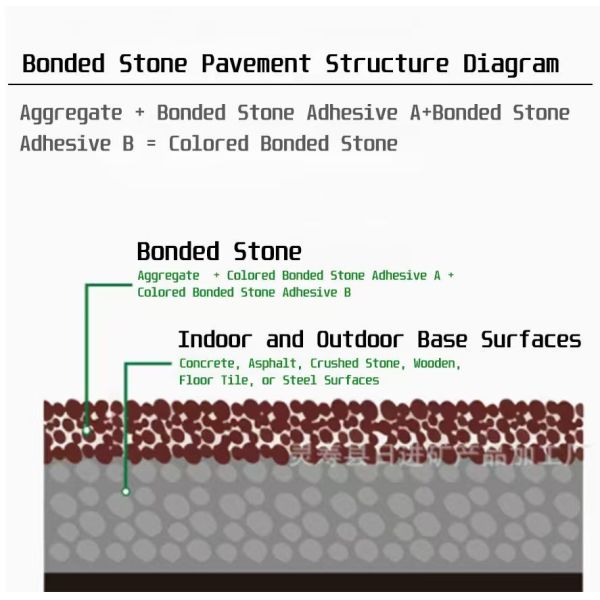
Application Instructions
Preparation Work
Empty mixing buckets (clean) or buckets containing the base
component. Mixing stick (manual or electric). Electronic scale or
other high-precision measuring tools.
Surface Preparation
The surface to be bonded must be dry, free of oil, dust, or other
contaminants (can be cleaned with ethanol). If the metal surface is
primed, ensure the release agent on the plastic surface is removed.
Polishing the bonding surface can significantly enhance adhesion.

Glue Mixing
If the adhesive has been stored for a period, stir the base
component thoroughly first. Mix the adhesive in the correct ratio
and use it within the working time (POT LIFE). Try to use the mixed
adhesive as soon as possible. If not used immediately, remix it
before application.

Adhesive Application
Apply the adhesive evenly using a serrated scraper, manually or
with a roller. The amount of adhesive used depends on the
smoothness and flatness of the surface.

Apply Pressure
Bonded panels should be pressed together within the open time to
ensure proper adhesion.
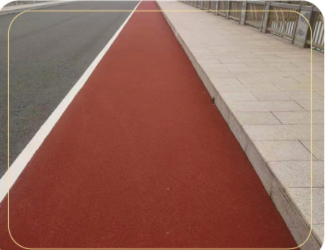
Key Advantages
- Technology Fusion: Combines advanced European and American expertise with tailored
adaptations for domestic market
- 100% Eco-Safe: Zero volatile organic compounds (VOCs), ensuring non-toxic
application and environmental compliance
- Multi-Certification: Independently verified by SGS, EU/ROHS, phthalate tests, and
Shenzhen sports surface standards
- High Value Creation: Efficiently bonds rubber/sponge particles into durable, versatile
end-products
Primary Applications
- Sports & Recreation: Gym mats, playground surfaces, sports flooring
- Commercial & Public Spaces: Library flooring, industrial flooring
systems, soundproof panels
- Construction & Acoustics: Bonding for sound insulation materials
and composite building products
Why Choose Our Polyurethane Adhesive?
- Performance-Driven: Ensures strong, durable bonds under demanding conditions
- Market-Focused: Optimized for local requirements while meeting global
certifications
- Sustainability-Compliant: Supports green building and eco-friendly manufacturing initiatives
Certifications & Standards
SGS Tested EU/ROHS Compliance Phthalate-Free Certification Shenzhen Sports Surface Standard
Target Industries
- Rubber & Sponge Recycling/Processing
- Sports Facility Construction
- Building Material Manufacturing
- Industrial & Commercial Flooring

Company Overview

Quality Assurance & Research

Manufacturing & Storage

Frequently Asked Questions
What is the target application for your prepolymer?
Please specify your industry and end-use, e.g., footwear (soles),
industrial rollers, seals, or other elastomeric components. This
helps us recommend the optimal formulation and curing system.
What are your specific performance requirements?
Please indicate your target values for hardness (Shore A/D),
tensile strength, elongation at break, and abrasion resistance. Our
standard M240/60D offers excellent specifications, but we can
customize to meet your needs.
Do you require a specific curing agent or system?
We typically recommend BDO or other curatives. Let us know if you
have a preferred curative or if you need technical assistance in
selecting the best one for your process.
What is your required sample quantity for testing and evaluation?
We provide free samples (typically 1-2 kg) for R&D purposes.
Please specify the quantity needed to conduct your initial trials.
What certifications or quality standards are mandatory for your
project?
Our products are SGS and ROHS certified. Inform us if you need
additional certifications like ISO, REACH, or specific industry
standards.
What is your estimated monthly or annual consumption volume?
Providing your forecasted volume (kg/month or tons/year) allows us
to structure the most competitive pricing and ensure supply chain
stability.
What is your target price per kilogram?
While we strive to offer the best value, sharing your budget helps
us find a solution that meets both your performance and cost
requirements.
Do you require technical support during product development or
production?
Our technical team can provide guidance on formulation
optimization, processing parameters, and troubleshooting. Let us
know your level of support needs.

 RF100-75 Series Polyurethane Adhesive TM Formula PU Binder For Porous Materials

